
Frontend
- Next.js
- TypeScript
- Responsive application architecture
Project · Event Technology
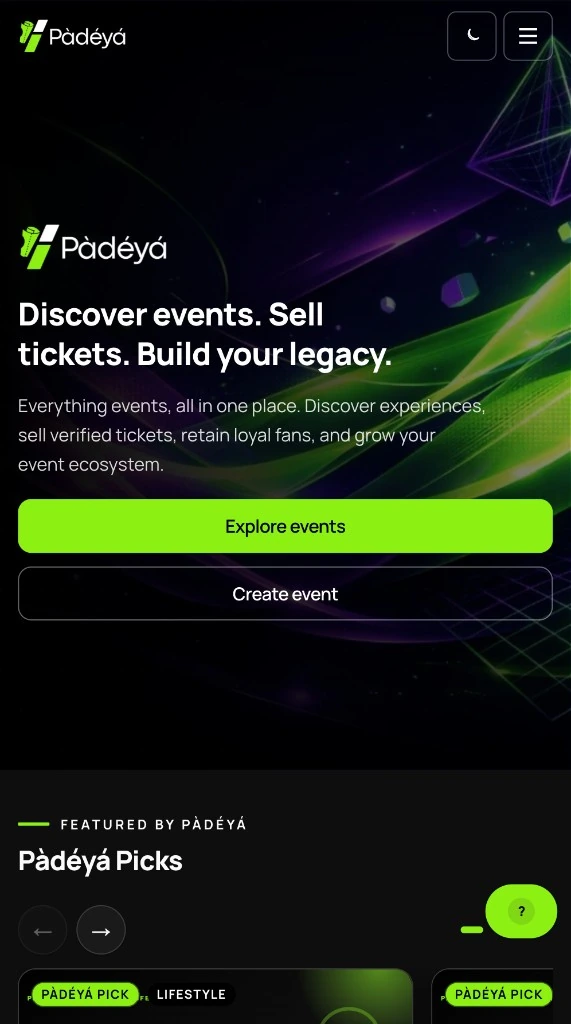
A digital event platform built to connect hosts, fans, ambassadors and sponsors before, during and after an event.
The live website may have changed since this case study was published and may differ from the work shown here.
The project
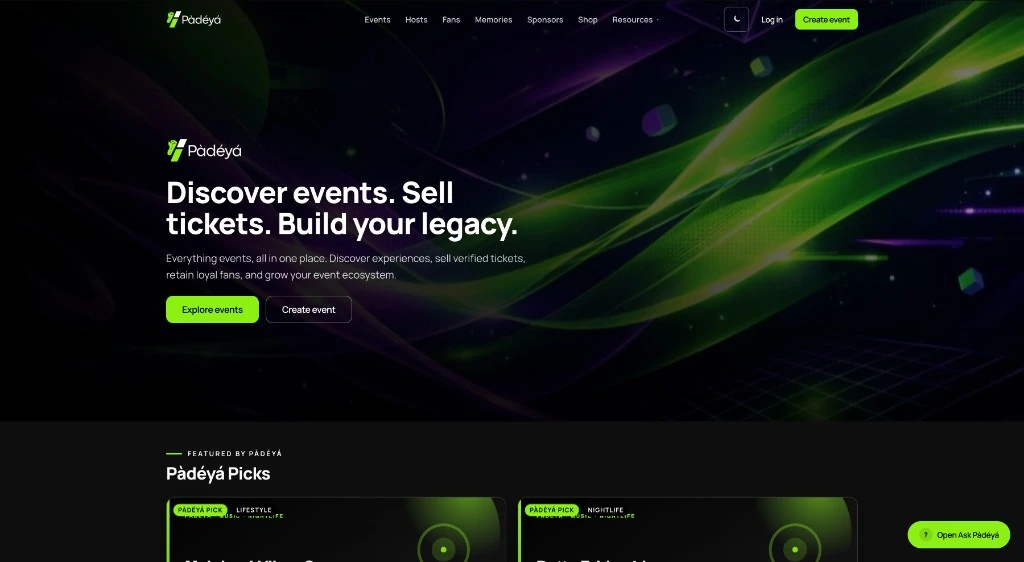
Pàdéyá was created as an event technology platform designed to bring the fragmented event experience into one connected ecosystem.
Instead of focusing only on ticket sales, the platform connects event discovery, ticketing, host operations, fan identities, event memories, ambassador referrals, sponsorships, merchandise and post-event engagement.
The goal was to create infrastructure that works for both sides of the event economy: the people creating experiences and the people attending them.
The challenge
Traditional ticketing platforms often end their relationship with users once a ticket is purchased. Pàdéyá needed to support the wider event lifecycle — from discovery and promotion to attendance, memories and future engagement.
Fans, hosts, ambassadors, sponsors and administrators each needed their own experience without turning the product into a collection of disconnected dashboards.
Ticket creation needed to depend on verified payment, while admission required secure QR-based check-in without exposing sensitive internal identifiers.
Hosts needed more than an event listing. The platform required a way to build a lasting public identity around completed events, verified attendance, reviews and other proven activity.
Hosts needed tools for ambassadors, promotion, merchandise, sponsorship, audience relationships and analytics without managing several disconnected systems.
Our approach
We mapped the platform around the main participants in the event ecosystem: fans, hosts, ambassadors, sponsors and administrators.
Each role received purpose-built workflows while sharing the same underlying event, payment, identity and engagement infrastructure.
Payments, tickets, QR admission, permissions, reviews and financial records were designed around server-side validation and controlled access rather than frontend assumptions.
We designed workflows that continue beyond checkout through host follows, Fan Passports, verified check-ins, Memories, reviews and repeat engagement.
Ambassador campaigns, host CRM, sponsorship opportunities, merchandise and analytics were built into the wider platform rather than added as isolated tools.
The solution
Pàdéyá became a multi-sided event platform combining public event discovery with operational tools behind the scenes. The platform gives fans a richer way to discover and remember events while giving hosts infrastructure for managing events, audiences, promotion and long-term reputation.
Visitors can discover public events by location, category and other relevant criteria, view event information and move through structured ticket-purchase flows. Tickets are issued only after verified payment.
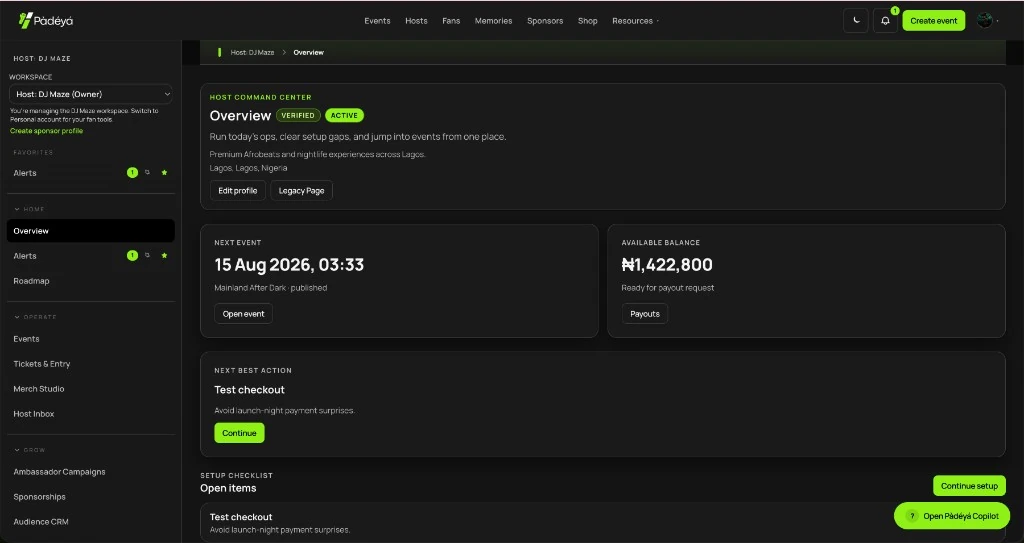
Hosts can create and manage events, ticket types, event media, attendees, check-ins, promotions and operational information from a dedicated workspace.
Secure ticket QR codes support event admission and verified check-ins while avoiding raw internal identifiers in public-facing QR payloads.
Fans can build a persistent identity around the events, hosts and experiences they interact with rather than starting from zero after every event.
Events continue after the final check-in through Memories, allowing event photos and moments to become part of the event’s lasting experience.
Pàdéyá Legacy turns verified hosting activity into a long-term reputation system based on factors such as ratings, completed events, ticket sales, verified check-ins and consistency.
Hosts can run event-specific ambassador campaigns, while Pàdéyá can operate platform-wide programs. The system tracks attribution, commission earnings and funding responsibility while keeping host-funded and Pàdéyá-funded earnings separate.
The platform extends beyond ticketing with sponsorship and merchandise capabilities, giving events additional ways to build commercial relationships around their audiences.
Pàdéyá includes an AI assistant architecture designed to help visitors discover public content and help authenticated users navigate their dashboards and understand permitted account information.
A dedicated administration layer supports moderation, taxonomy management, financial visibility, platform configuration, content operations and other controlled workflows.
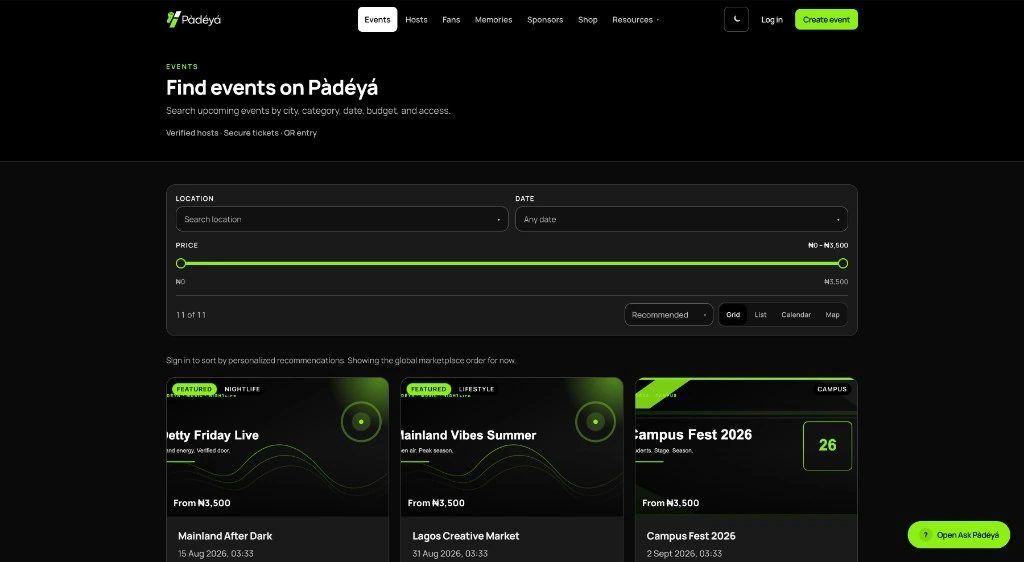
Event discovery
Visitors can discover public events by location, category and other relevant criteria, view event information and move through structured ticket-purchase flows. Tickets are issued only after verified payment.
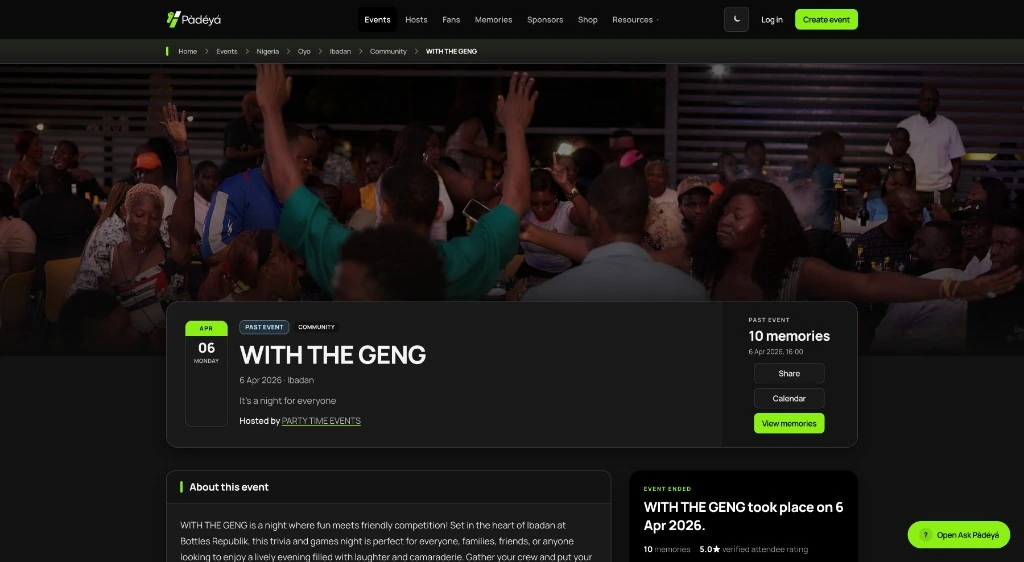
Event pages
Public event pages bring together ticketing, host information, memories and post-event engagement so fans can understand an event before, during and after it happens.
Host workspace
Hosts can create and manage events, ticket types, event media, attendees, check-ins, promotions and operational information from a dedicated workspace.
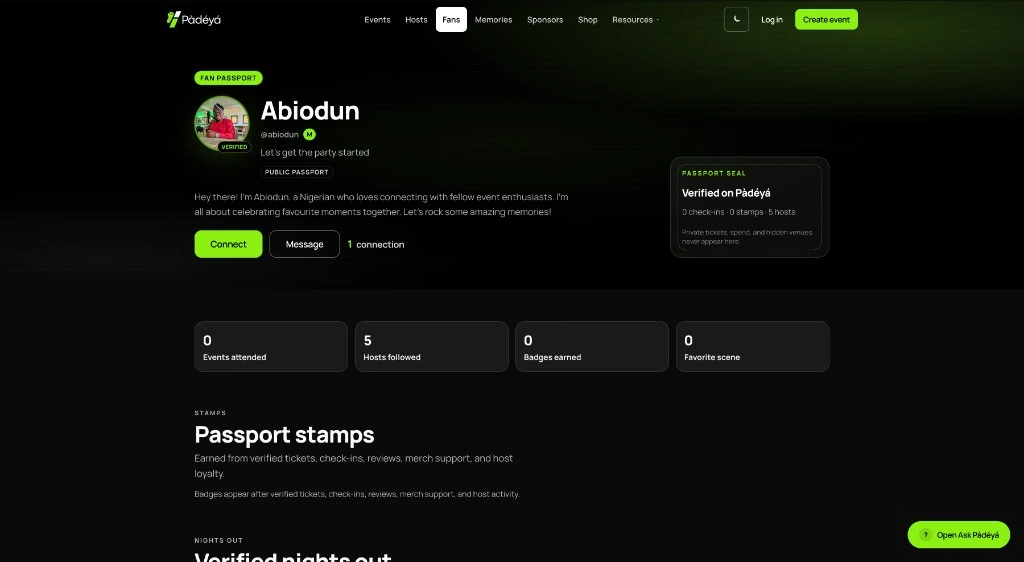
Fan Passport
Fans can build a persistent identity around the events, hosts and experiences they interact with rather than starting from zero after every event.
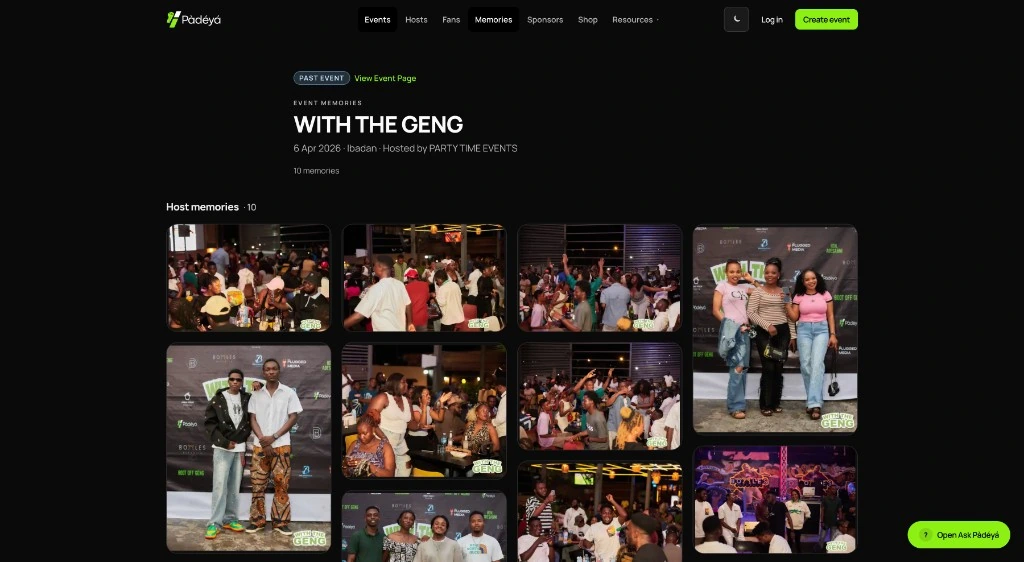
Event Memories
Events continue after the final check-in through Memories, allowing event photos and moments to become part of the event’s lasting experience.
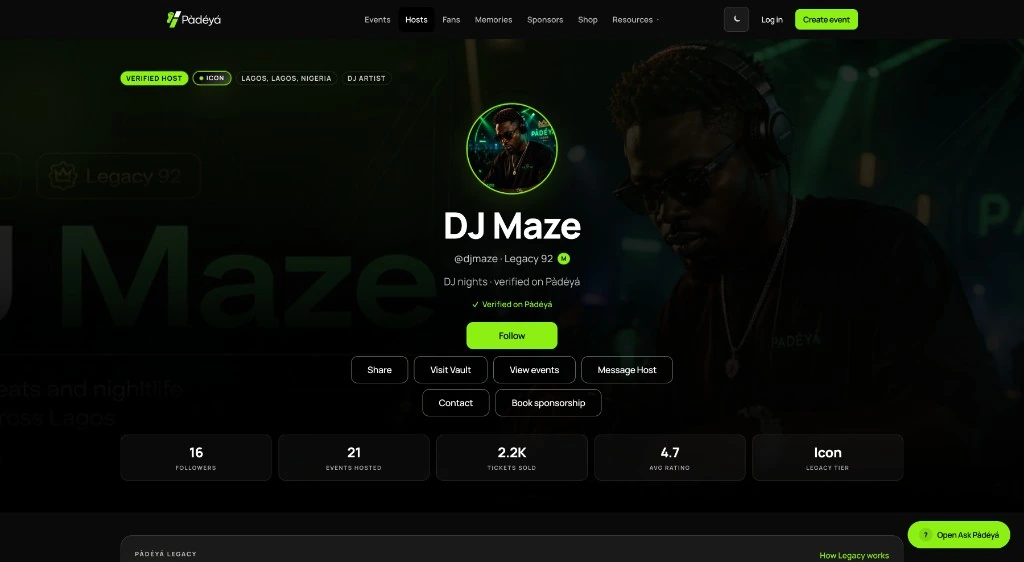
Host Legacy
Pàdéyá Legacy turns verified hosting activity into a long-term reputation system based on factors such as ratings, completed events, ticket sales, verified check-ins and consistency.
Project highlights
Outcome
Pàdéyá evolved from an event-ticketing concept into a broader event technology platform that connects discovery, ticketing, admission, promotion and post-event engagement through a shared system for hosts, fans, ambassadors and sponsors.
Public event discovery experience
Host and fan dashboards
Event ticketing and payment workflows
QR-based admission
Fan Passport profiles
Event Memories
Host Legacy profiles
Ambassador and referral infrastructure
Sponsorship and merchandise foundations
Administration and analytics systems
Mobile-responsive interfaces
Engineering
Pàdéyá was developed as a custom web platform rather than a conventional CMS website.
Services used
Product & UI Design
Designing public and authenticated experiences across several user roles while maintaining one coherent product system.
Web Application Development
Building the frontend and backend architecture powering event discovery, dashboards, payments and operational workflows.
Automation & Integrations
Connecting payments, notifications, referral attribution, admission workflows and other platform processes.
Platform
Pàdéyá combines a modern Next.js frontend with a Python FastAPI backend to support public discovery experiences alongside authenticated, data-intensive dashboards. Instead of relying on a conventional CMS architecture, the application uses structured APIs, role-based permissions and purpose-built services for events, payments, tickets, referrals and platform operations.
More work
Other Smartlance projects with related industries, platforms or services.

Property Management · WordPress
Website Design · Website Development
View Case StudyIf you need a custom platform, marketplace, dashboard or web application, tell us what you're building and what the product needs to do.
Tell us what you're building, redesigning or trying to improve. We'll help you figure out the right next step.